


Standard ISO Dry Bulk Container
The 20’ Bulk Container (ISO 22B0) is specifically designed for transporting free-flowing dry bulk cargo without the need for bags or pallets. Manufactured in accordance with ISO and CSC requirements, it features roof loading hatches and discharge hatches integrated into the end doors, allowing fast loading and gravity discharge. The ISO code 22B0 identifies a standard 20-foot dry bulk container.
The enclosed design protects cargo from moisture and contamination while providing an efficient solution for transporting agricultural and industrial bulk commodities by sea, rail and road.
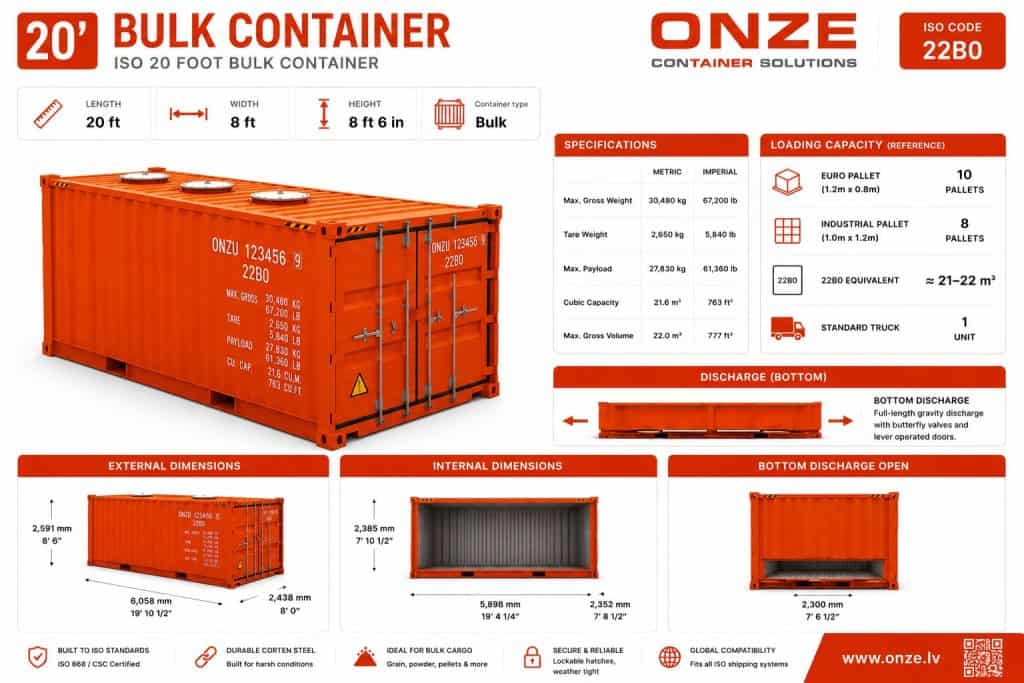
Technical Specifications
| Specification | Value |
|---|---|
| ISO Code | 22B0 |
| External Length | 6,058 mm |
| External Width | 2,438 mm |
| External Height | 2,591 mm |
| Internal Length | 5,900 mm* |
| Internal Width | 2,352 mm* |
| Internal Height | 2,390 mm* |
| Maximum Gross Weight | 30,480 kg |
| Tare Weight | 2,600 kg |
| Maximum Payload | 27,880 kg |
| Cubic Capacity | 33.0 m³* |
External Dimensions
The external dimensions comply with ISO standards, allowing unrestricted use across international container transport systems.
- Length: 6,058 mm
- Width: 2,438 mm
- Height: 2,591 mm
The standardized footprint enables efficient handling by container cranes, reach stackers, trucks and railway wagons.
Internal Dimensions
The enclosed cargo compartment is designed to maximize loading efficiency for dry bulk materials.
- Length: 5,900 mm
- Width: 2,352 mm
- Height: 2,390 mm
The container provides a large internal volume while allowing rapid loading and discharge of bulk cargo.
Loading & Discharge System
The 22B0 Bulk Container is equipped with dedicated loading and discharge openings for loose bulk materials.
Typical features include:
- Three roof loading hatches
- Gravity discharge through end-door hatches
- Bulk-tight construction
- Internal chamfered corners for improved cargo flow
This design minimizes loading time while simplifying unloading operations.
Payload & Weight Ratings
The reinforced construction provides high payload capacity for transporting dense bulk commodities.
- Maximum Gross Weight: 30,480 kg
- Tare Weight: 2,600 kg
- Maximum Payload: 27,880 kg
Actual payload depends on cargo density and manufacturer specifications.
Cargo Types
Typical cargo includes:
- Grain
- Wheat
- Corn
- Barley
- Rice
- Coffee beans
- Cocoa beans
- Malt
- Plastic granules
- Animal feed
- Fertilizers
- Dry chemicals
The container is intended for dry, free-flowing bulk materials that can be loaded through roof hatches and discharged by gravity.
Bulk Container Design
The 22B0 Bulk Container features:
- Roof loading hatches
- Rear discharge hatches
- Bulk-tight construction
- Reinforced steel structure
- Heavy-duty floor
- Multiple cargo securing points
- ISO corner castings
The enclosed body protects cargo from weather while enabling efficient bulk handling.
Construction
The structure is manufactured from high-strength Corten steel, providing excellent durability under demanding operating conditions.
Standard construction features include:
- Reinforced steel body
- Bulk-tight interior
- Roof loading hatches
- Rear discharge hatches
- Marine plywood floor
- CSC certification
- ISO corner castings
Applications
The 20’ Bulk Container is commonly used for:
- Agricultural products
- Grain logistics
- Coffee export
- Cocoa transportation
- Fertilizer transport
- Plastic resin logistics
- Feed transportation
- Dry chemical products
- Industrial minerals
- Food-grade bulk cargo
Standards & Certification
This container type complies with internationally recognised transport standards, including:
- ISO 668
- ISO 6346
- CSC Convention
- International intermodal transport requirements
These standards ensure worldwide compatibility with ports, depots, shipping lines and logistics operators.
Frequently Asked Questions
What does ISO code 22B0 mean?
22B0 identifies a standard 20-foot Dry Bulk Container designed for transporting free-flowing dry bulk cargo.
How is cargo loaded?
Cargo is loaded through roof hatches using conveyors, loaders or gravity filling systems.
How is cargo unloaded?
Bulk materials are discharged through dedicated hatches located in the end doors using gravity.
What products can be transported?
Typical cargo includes grain, coffee beans, malt, fertilizers, plastic granules, animal feed and other free-flowing dry bulk products.
Is the container suitable for international shipping?
Yes. It is designed specifically for international intermodal transport by sea, rail and road.